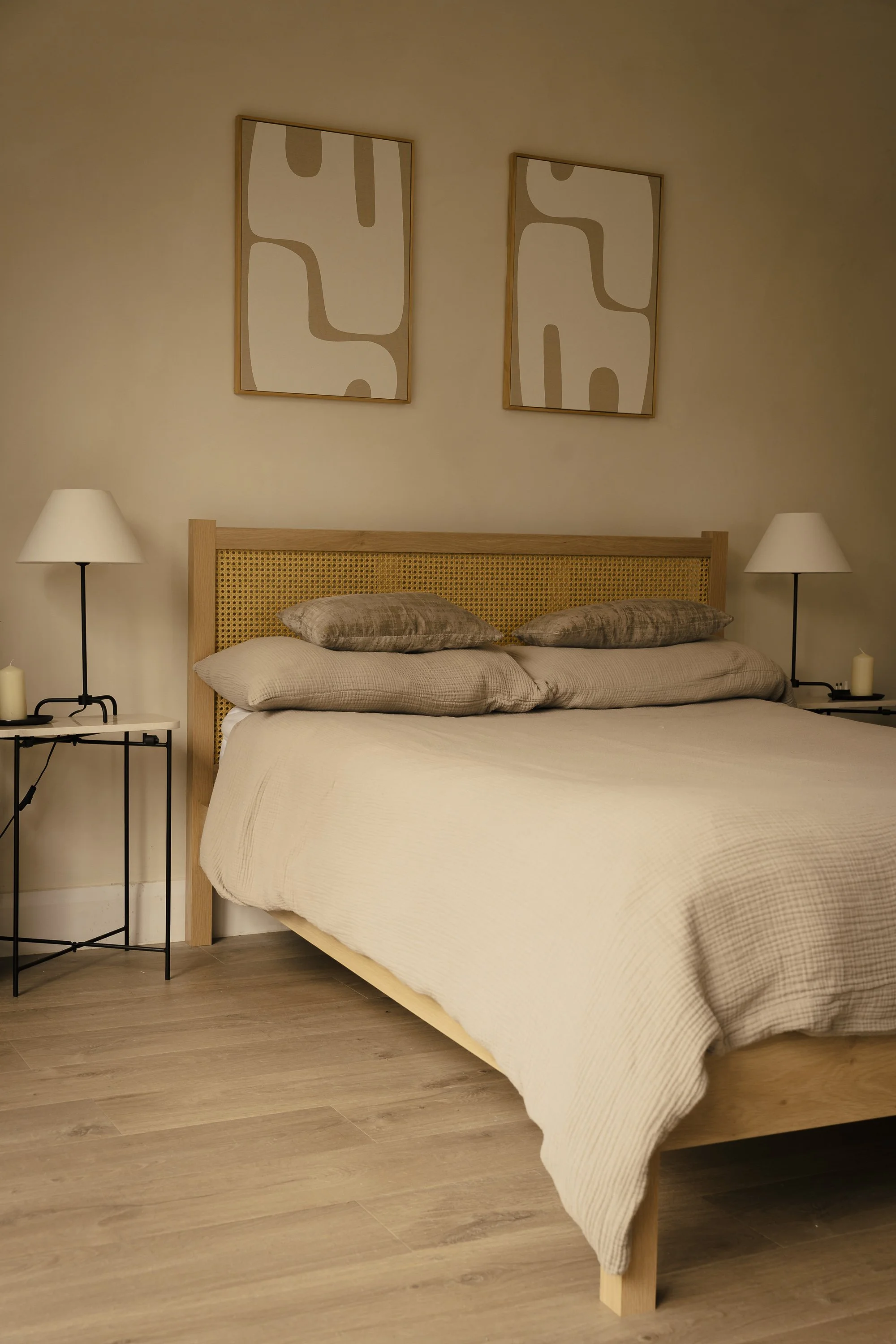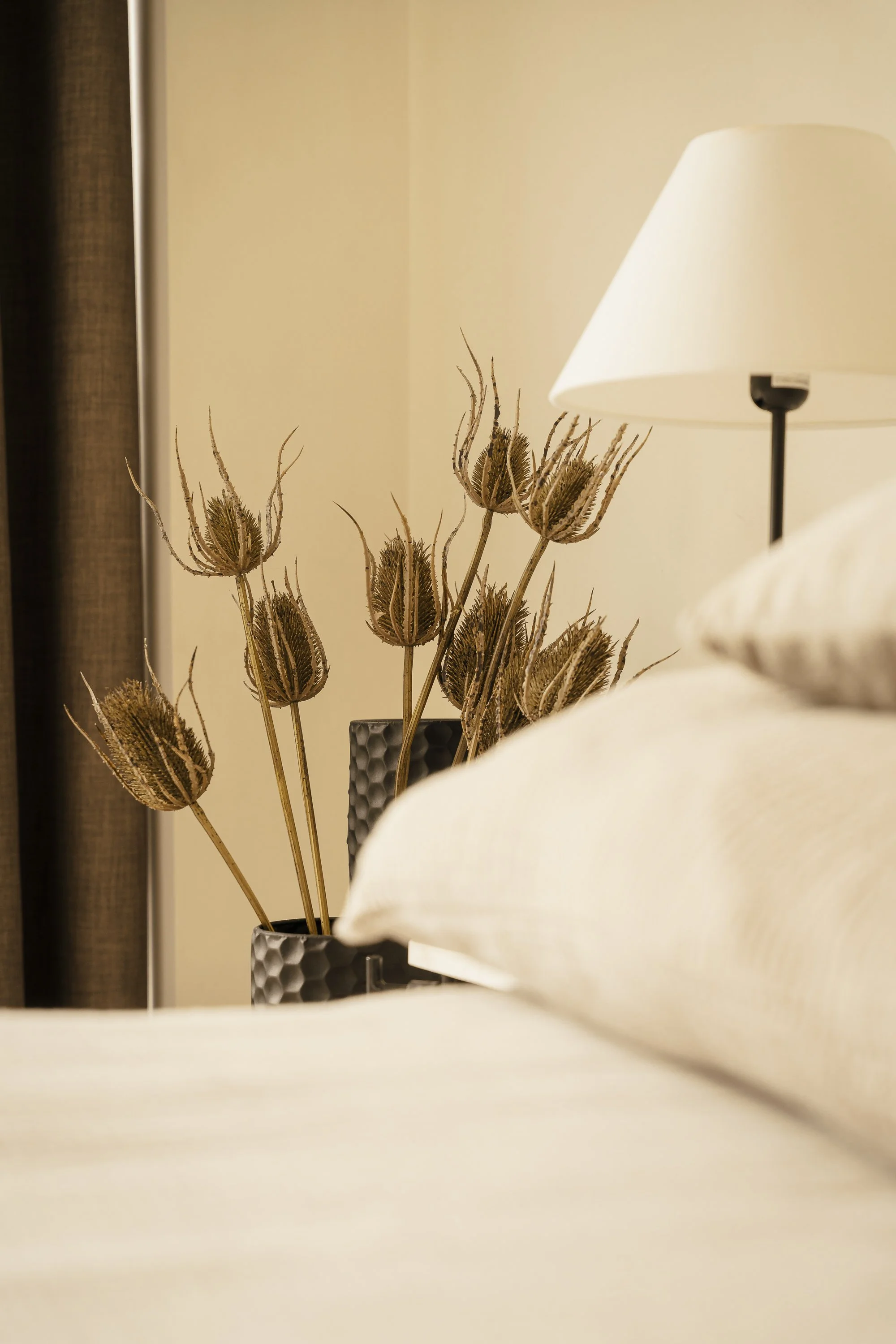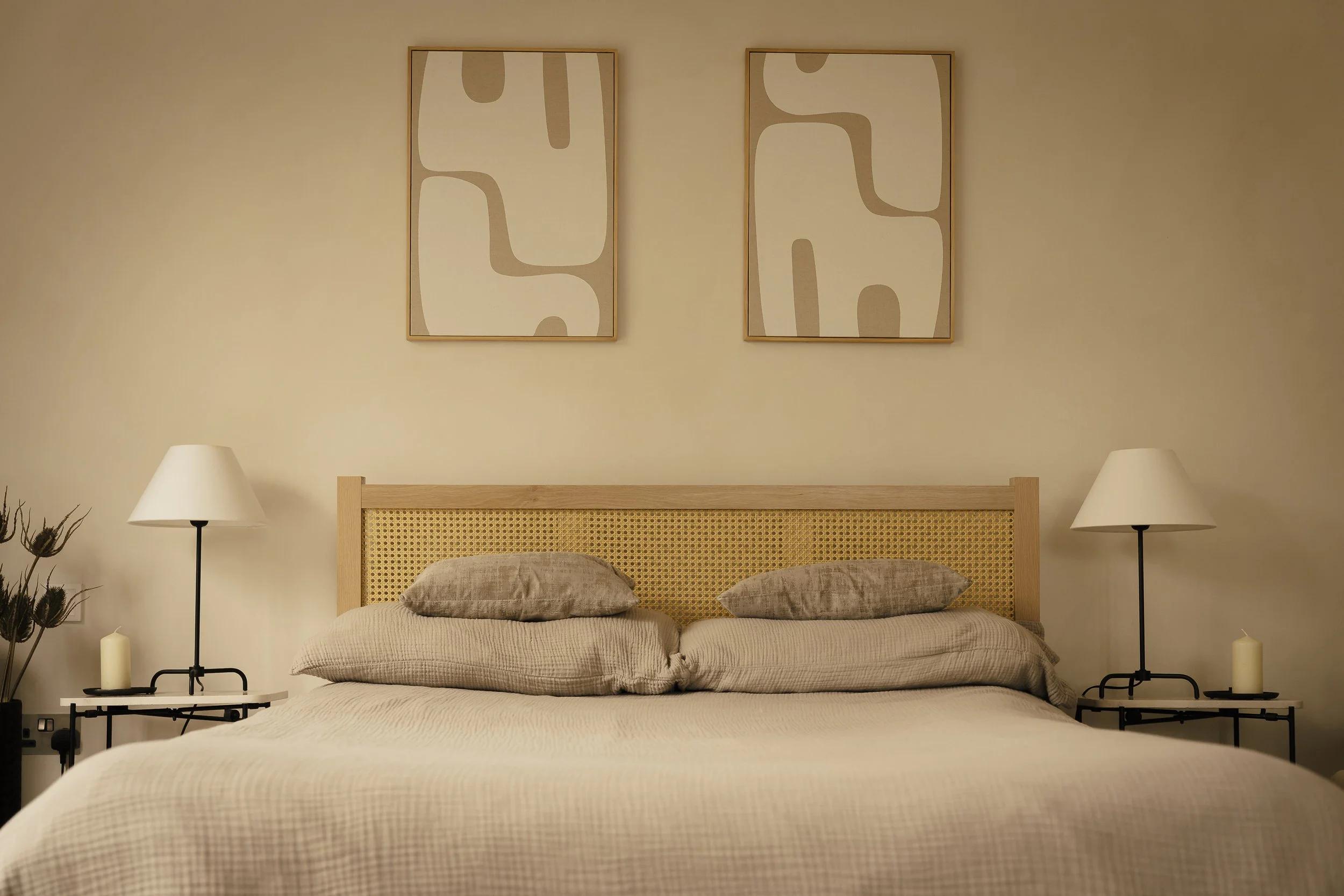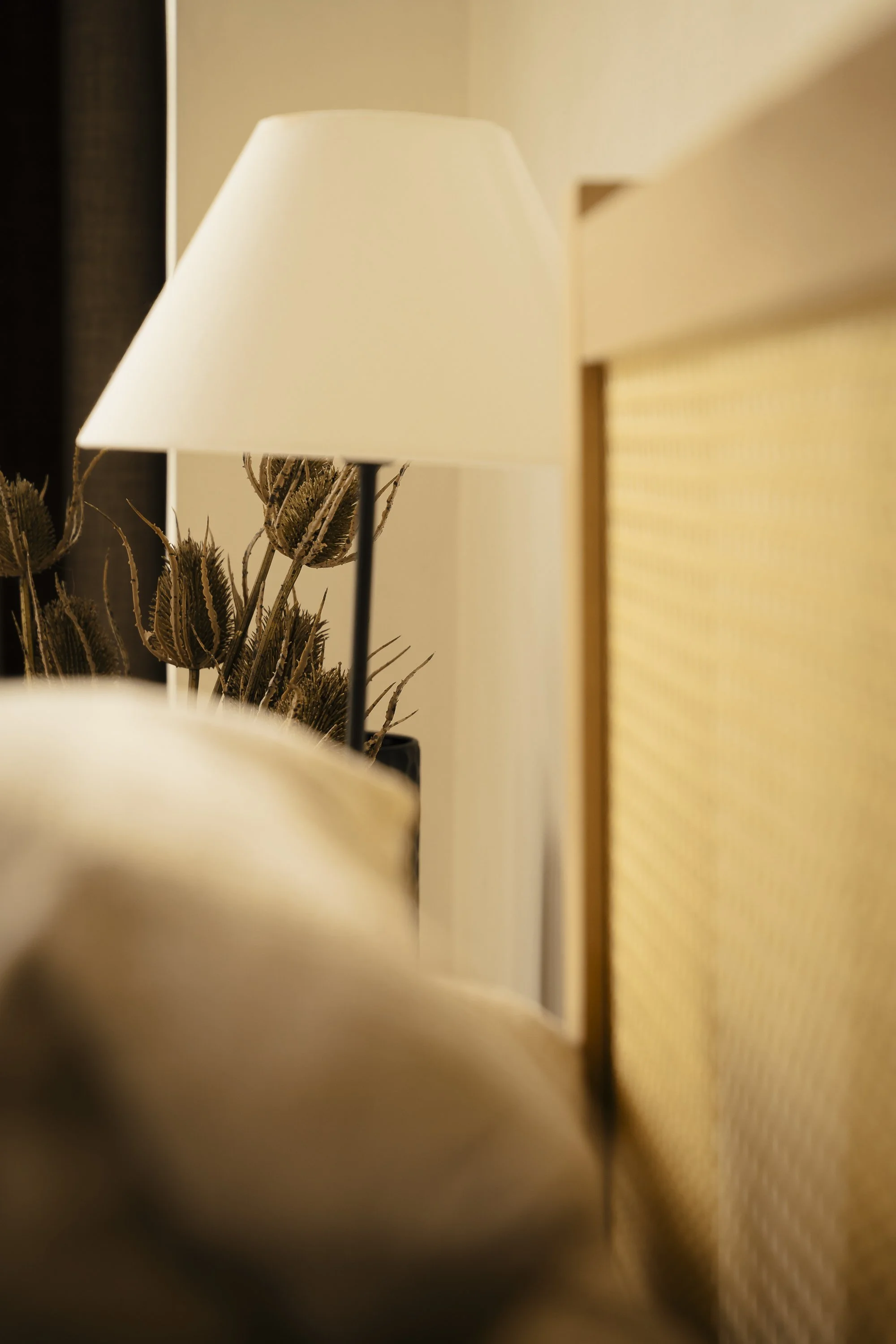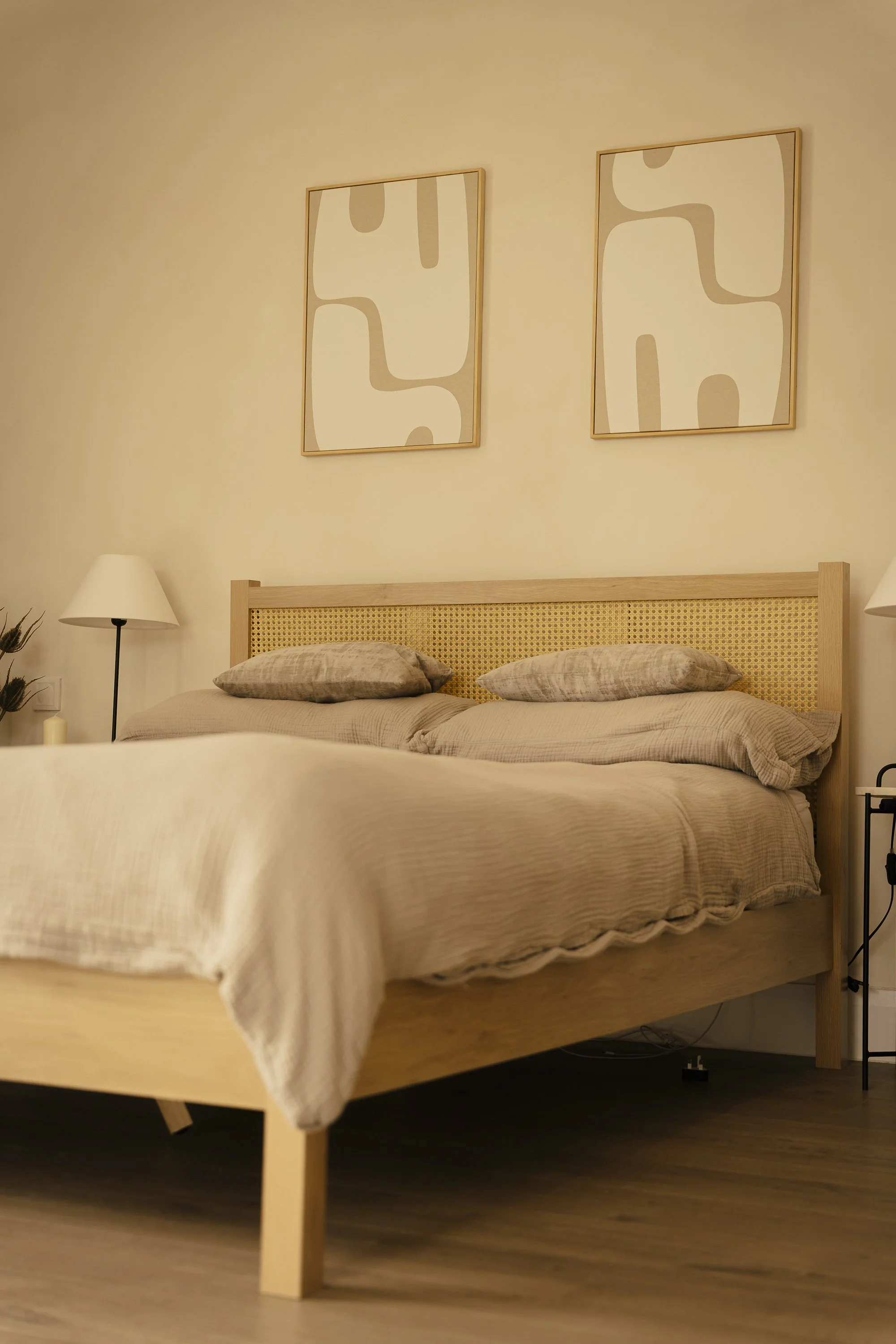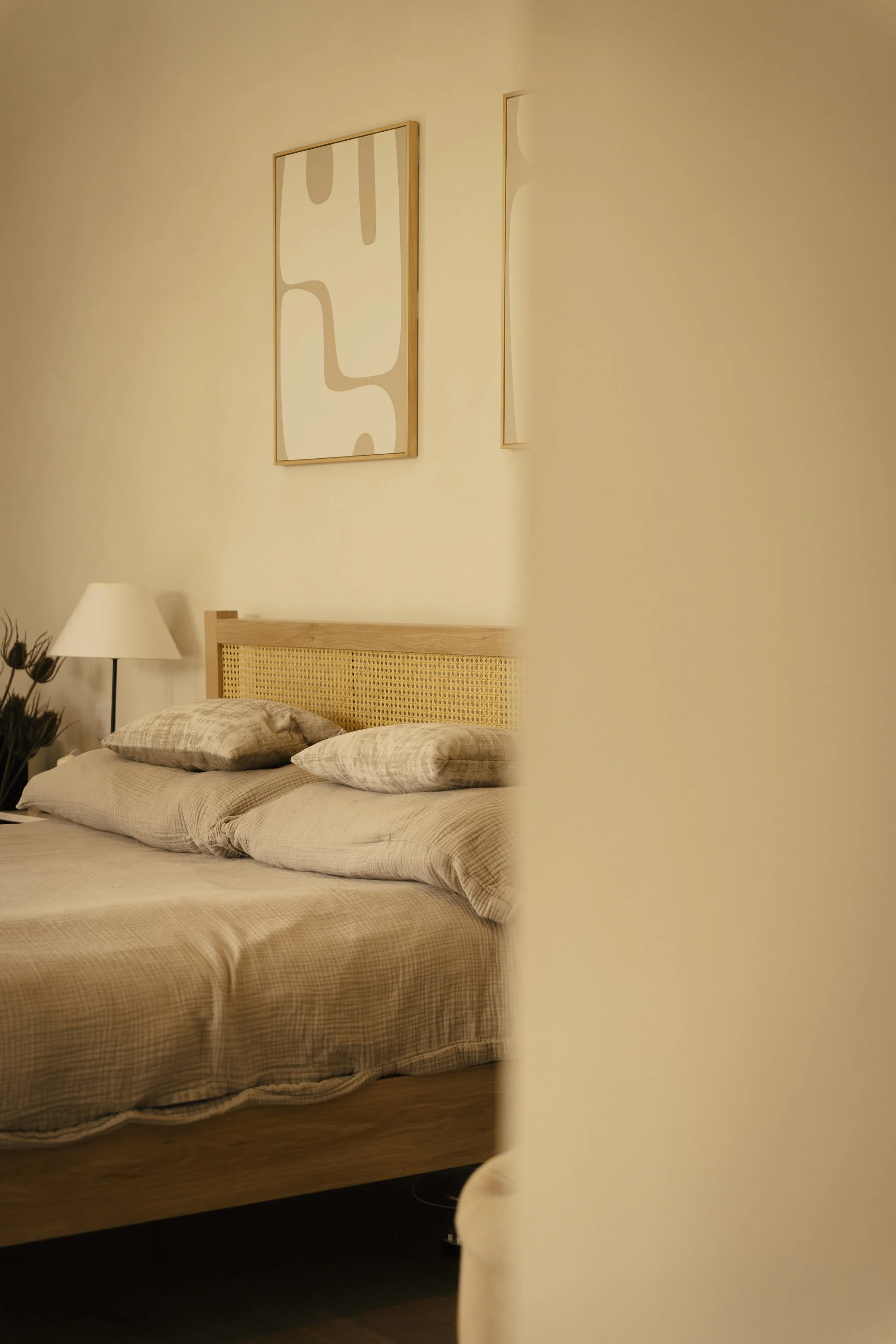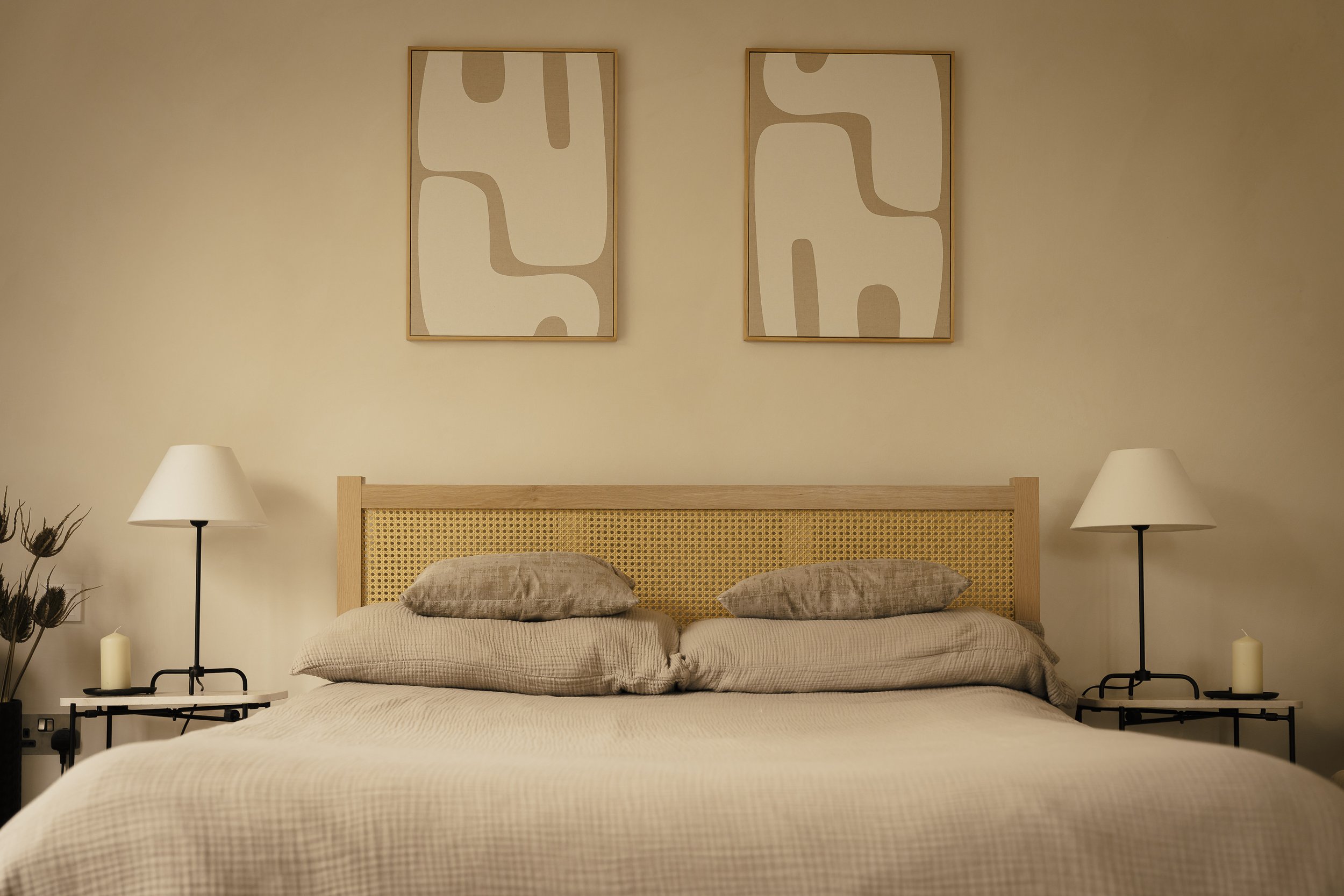
Creating a sense of calm begins with knowing when to stop with the design. And knowing you don’t need perfection.
Your surroundings influence your mood and directly impact your nervous system.
When awake, the brain is constantly processing colour, texture, pattern, objects and visual information — even when we don’t realise it. When every surface asks for attention, it can leave us feeling overstimulated and unsettled.
A quieter space allows something different.
In a bedroom especially, simplicity creates room to breathe. It reduces visual noise, softens the transition from doing to resting, and helps create an environment that feels calm rather than demanding, because when you enter that space, your nervous system starts to calm down. Your body starts to wind down ready to rest. That’s the purpose of your bedroom.
That’s why I’m thoughtful about what comes into a space, the bedroom especially. I don’t just choose less, I carefully select everything. I know when to add more and when to take something away so that balance is created.
If there are fewer elements, each one matters more.
Materials begin to do the talking:
– the texture of natural wood - grounding
– the softness of linen - soothing
– the cold touch of stone - calming
– the way light moves across a surface throughout the day – creative.
Nothing shouting for attention. Everything working together.
Creating spaces that feel clear, balanced and deeply restorative — not because they’re sparse, but because they’ve been carefully considered. That’s what I mean by ‘intentional’.